Technology Opportunities & Ventures
While focus is on header menu items,
press the down arrow to open sub-menu.
press the down arrow to open sub-menu.


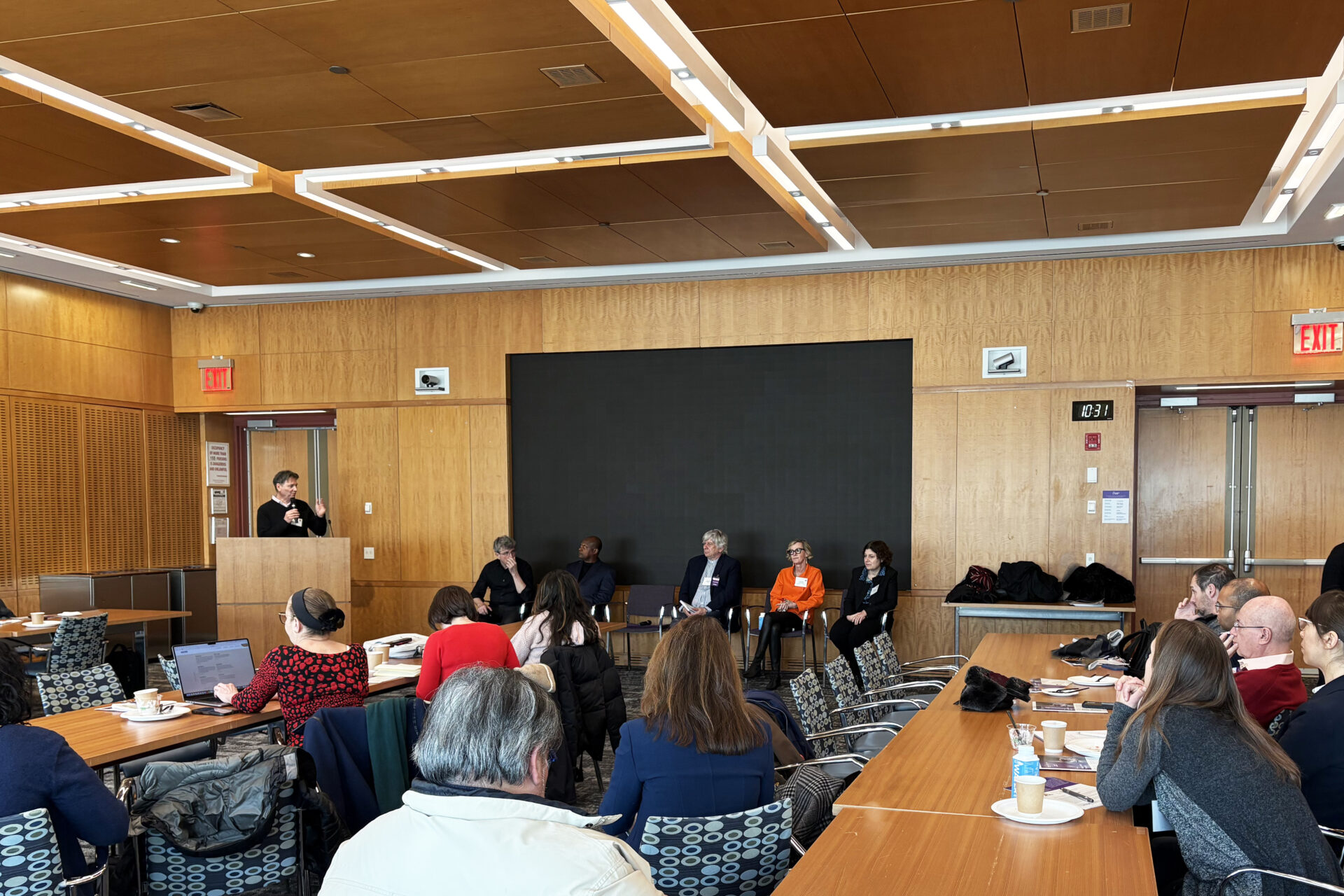
On Thursday, January 29, Technology Opportunities & Ventures (TOV) launched SciCafé @ NYU Langone Health, an invitation-only forum designed to connect academic innovators and leaders across New York’s biotech and investment ecosystem.
The inaugural event focused on induced-proximity therapeutics, including molecular glues and PROTACs, a rapidly advancing set of therapeutic modalities that have attracted hundreds of millions of dollars in financing and more than $1 billion in global deal activity over the past year.
Despite a chilly January morning, the event drew strong participation from across academia, industry, and venture investment. TOV’s Senior Director for Life Sciences and Technology Transfer, Sadhana Chitale, PhD, opened the proceedings by welcoming attendees and introducing a comprehensive white paper prepared by consultancy Scitaris, summarizing financings, deals, and industry trends in the induced-proximity field.
The audience included representatives from Access Industries, Scion Life Sciences, Deerfield, Osage University Partners, Curie.bio, and AN Venture Partners. Also in attendance were scientific founders from NYU, Columbia, Memorial Sloan Kettering Cancer Center, CUNY, and Weill Cornell, who have seeded five startups in the induced-proximity therapeutic area: Stablix, SEED Therapeutics, Flux Therapeutics, Nested Therapeutics, and Concarlo Therapeutics, as well as representatives from two additional startups, Chiara Bio and Serinus Bioscience.
A series of three 15-minute lightning talks followed, starting with a keynote from Henry Colecraft, PhD, of Columbia University, who provided an overview of innovations from his lab in therapeutically targeting ubiquitination and deubiquitination of ion channels. Arvin Dar, PhD of Memorial Sloan Kettering Cancer Center, summarized work from his lab on modulating cancer interactomes using molecular glues, highlighting advantages over traditional small molecules in mitigating cancer resistance. Muzammal Hussain, PhD of NYU Langone, presented work from the laboratory of Michele Pagano, PhD, on a cell-based assay for identifying molecular glue hits against specific targets of interest.
The talks were followed by a panel discussion moderated by former Nature Biotechnology Chief Editor Andy Marshall, PhD, exploring critical issues in translation and startup creation in the induced-proximity therapeutic space. Drs. Colecraft and Pagano discussed the small number of E3 ligases currently targeted by drugs and the lack of target-specific assays for discovering molecular glues. Stacy Blain, PhD of Concarlo Therapeutics, examined the challenges of launching companies within the New York City ecosystem, while Gerhard Müller, PhD of Spirochem, highlighted a growing trend of diversifying away from traditional PROTAC linker chemistries and immunomodulatory imide drug (IMiD)-based scaffolds that have so far dominated the glue field. Irina Vainberg of Troutman Pepper Locke noted that, with intellectual property in the space currently centered around composition-of-matter claims emerging from relatively limited chemotype diversity, she anticipates significantly more legal activity as products advance toward the market.
Looking ahead, Dr. Sadhana Chitale, together with Gaspar Taroncher Oldenburg, PhD, Director of Therapeutics Alliances, has organized a full calendar of SciCafé events for the coming year. Future sessions will explore topics including in vivo CAR-T therapies, neuroinflammation, and women’s health.